


Tru Clear will help lower and removing algae from retention ponds.
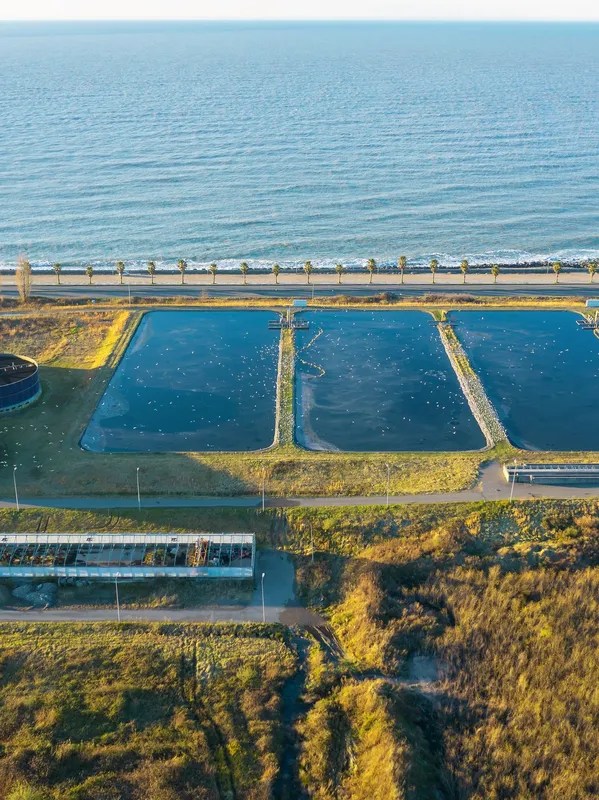

Tru-Clear supports healthier water ponds in commercial buildings—reducing algae, improving clarity, and minimizing maintenance.

Tru Clear will help lower and remove algae with golf course ponds.

Tru-Clear helps fountains stay fresh and inviting.
Where Algae is, Tru-Clear is there to help
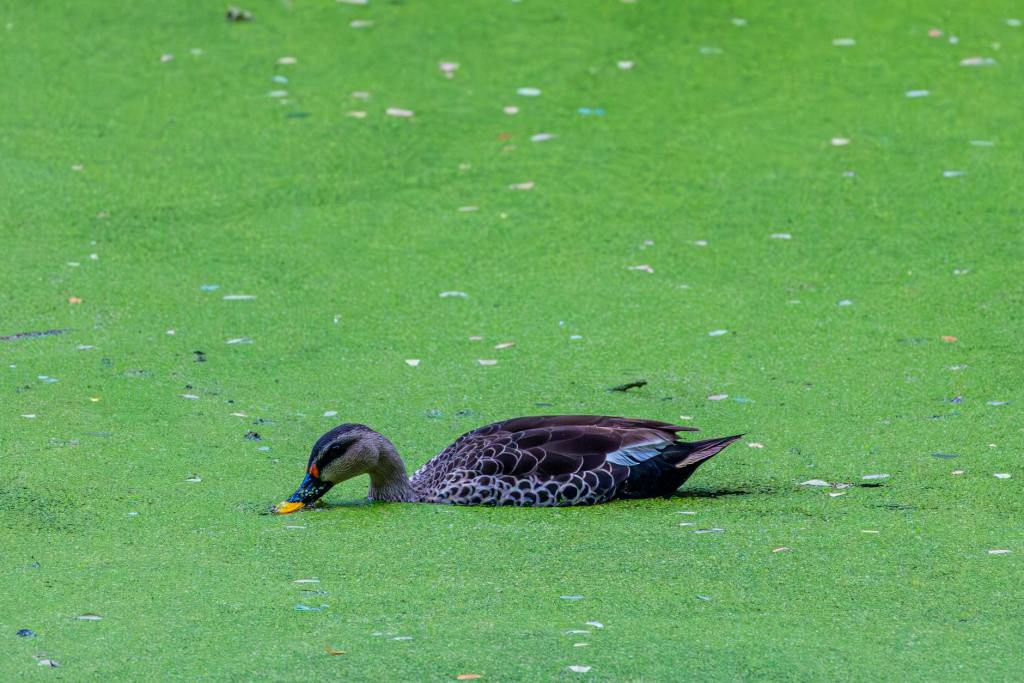
Planktonic Algae (Anabaena, Chlorella, Pediastrum, Scenedesmus, Oocystis)
Microscopic algae typically remain suspended near the surface of the water column. Their blooms can appear in various colors, most often resembling pea soup green, though brownish hues are also common. These tiny organisms absorb nutrients directly from the surrounding water, meaning their growth and reproduction are closely tied to nutrient availability. Ponds frequently accumulate nutrient-rich runoff from nearby yards, roads, and agricultural fields, which often leads to prolific growth of planktonic algae.

Spirogyra
Commonly referred to as Water Silk, this algae is easily identified by its long, thick, green, and slippery strands. Its name is derived from the spiral or helical shape of its chloroplasts. Filamentous algae tend to rise to the surface, forming dense, floating mats. Numerous species fall under this category, and it’s not uncommon for multiple types to coexist in a single pond. Blooms may begin as early as spring and often persist through the warmer months of summer and fall, sustained by elevated temperatures.
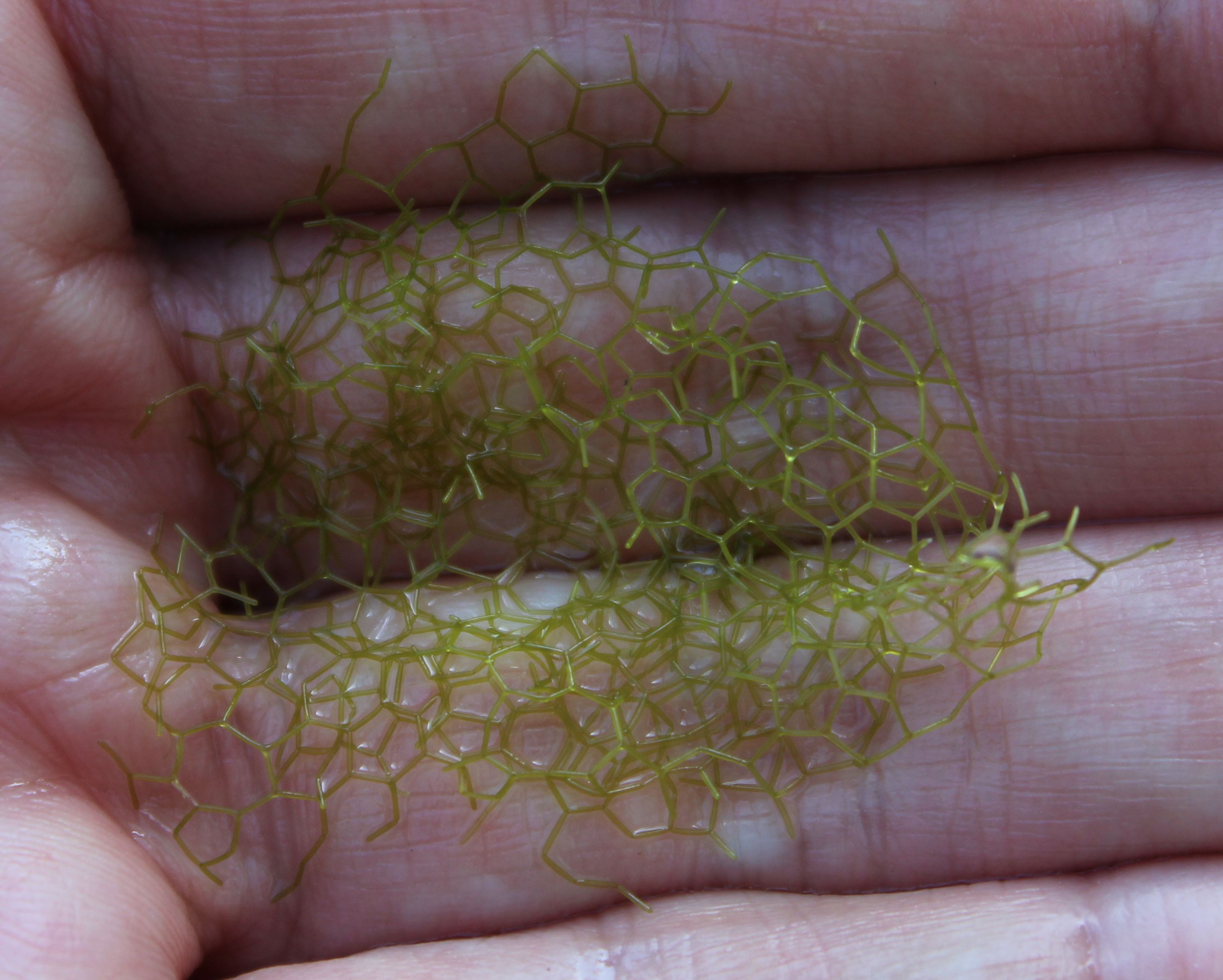
Hydrodictyon
Often referred to as waternet, this algae is distinguished by its intricate net-like structure, typically forming hexagonal or pentagonal patterns. Its mesh-like appearance results from interconnected and elongated cells. The dense floating mats it creates can be challenging to move through. Hydrodictyon cells are highly resilient, having adapted to thrive in harsh conditions and reproduce rapidly—making this type of algae particularly difficult to control.

Pithophora
Commonly referred to as cotton algae or horsehair algae, this species typically appears in shades of green and yellow. During warmer weather, it forms thick surface mats that become buoyant as gas bubbles—produced by the algae itself—get trapped within the dense growth. Strong winds or heavy rainfall can temporarily disrupt these mats, causing them to sink below the surface. This often creates the illusion that the algae has vanished, though it typically resurfaces shortly afterward.
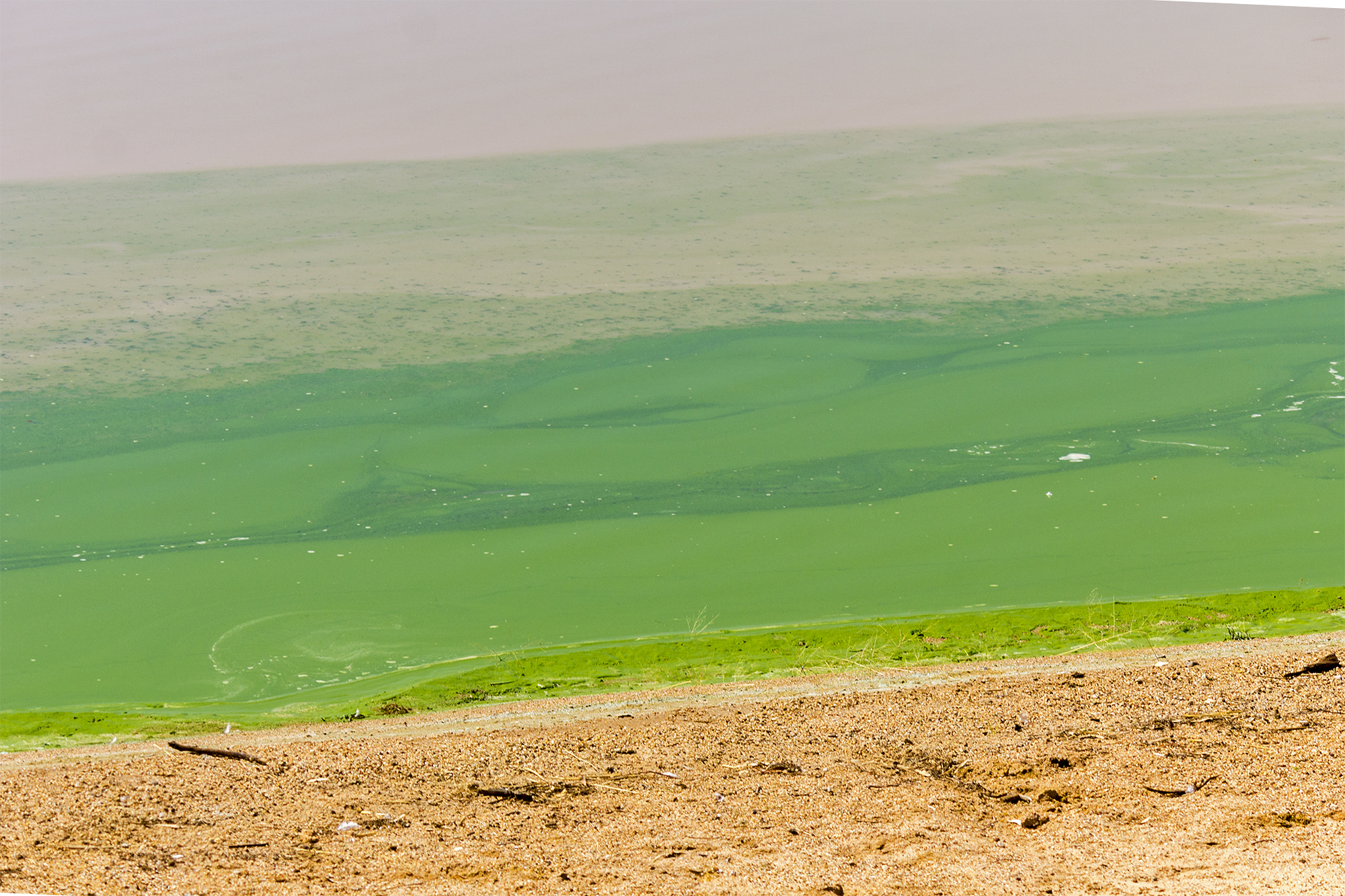
Microcystis
This harmful bloom, found in both freshwater and brackish environments, contains potent hepatotoxins and neurotoxins. While its color can vary, it most often appears as green patches suspended on the water’s surface. Microcystis blooms thrive in warm, slow-moving waters, especially where nitrogen and phosphorus levels are elevated. Adequate light intensity is also essential for photosynthesis, which fuels the growth and accumulation of these blooms.
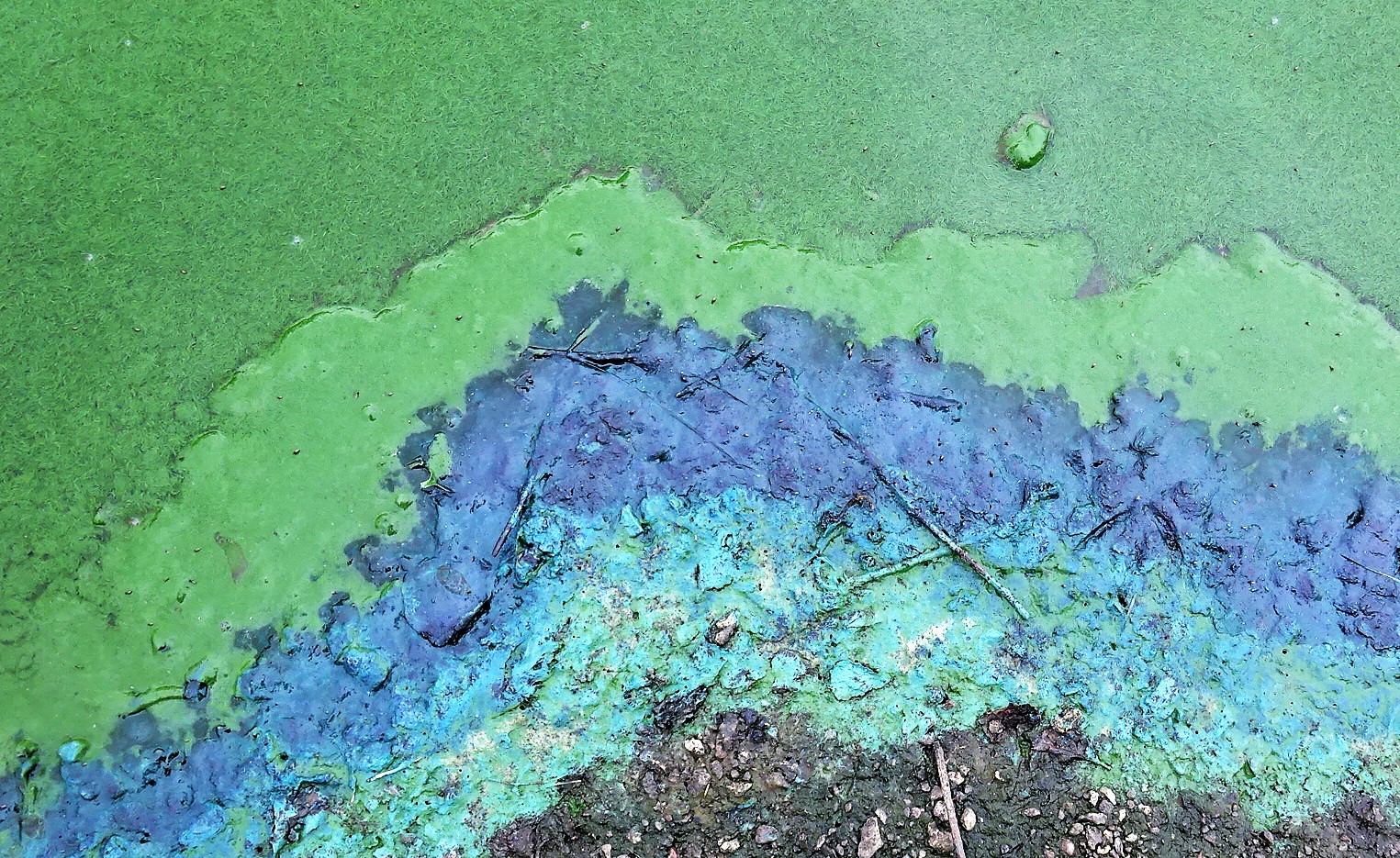
Blue Green Algae
These harmful blooms, found in both freshwater and saltwater environments, contain cyanotoxins that pose serious risks to pets and wildlife if ingested. Exposure can lead to symptoms such as nausea, diarrhea, and difficulty breathing. True to its name, this algae often appears as a blue-green slick across the surface of warm, stagnant ponds. While some blooms are dense and widespread, others may be more subtle—covering only small areas with minimal visible algae.
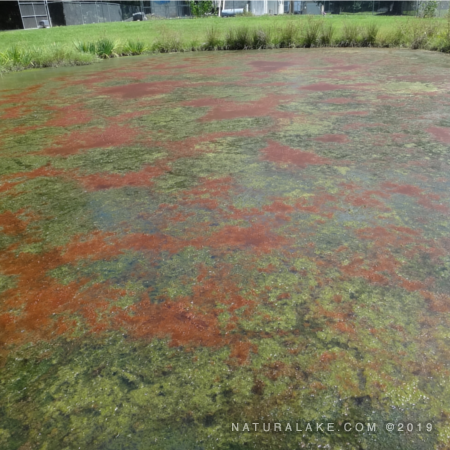
Euglena
This microscopic protozoan is found in both freshwater and saltwater environments and is most easily recognized by its striking red coloration on the pond’s surface. Euglena is difficult to control due to its single-cell structure and protective protein pellicle. When exposed to intense sunlight, it releases granules from its center that form a tougher outer shell, contributing to its vivid red appearance. Euglena thrives in warm, stagnant water, especially during the peak heat of summer.
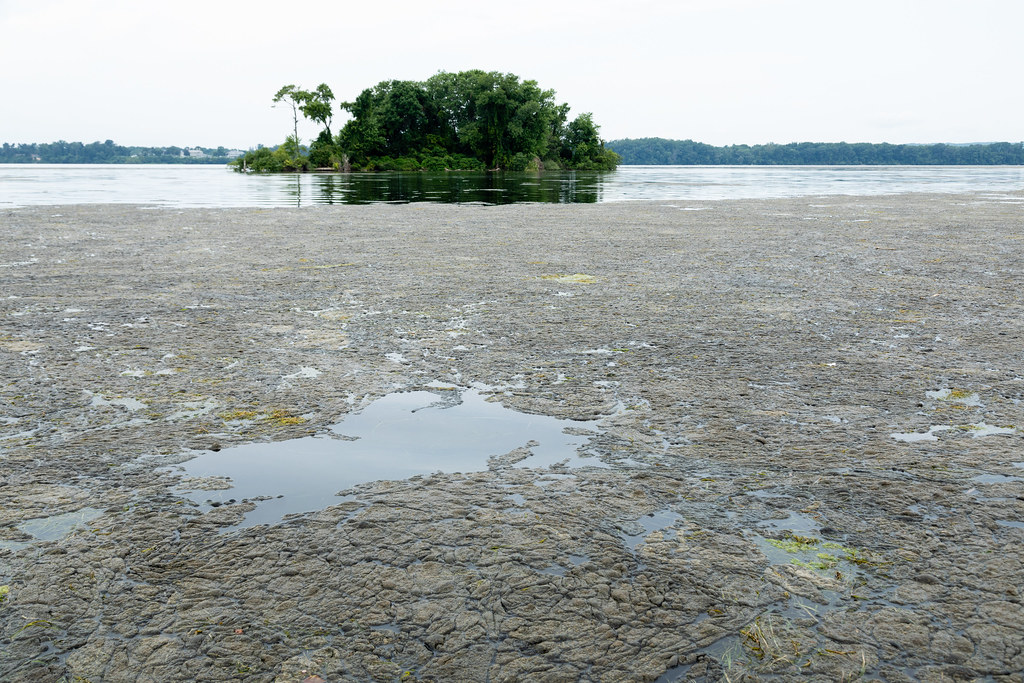
Lyngbya
Lyngbya is often identified by its gray, spongy masses that float on the pond’s surface. These thick mucilage formations—sometimes several inches deep—originate at the bottom and gradually rise to the top. Lyngbya can release cyanotoxins that pose a serious threat to the pond’s ecosystem. Its cells are encased in a dense glycoprotein sheath, which reinforces the cell wall and forms a resilient chemical barrier, making it especially difficult to manage.

Tru Clear is a safe treatment for ponds, and lakes . It will not harm children, household pets, waterfowl, or fish.
One of our clients has a large cemetery with an attractive pond that stands in the middle of a grassy area surrounded by trees. It is home to ducks and fish. The pond is about three feet deep and has a white liner on the bottom. Before the “TruMicrobe Clear” treatment, the pond was beautiful from a distance, but as you got closer, you could smell a bad odor and see that the water was murky. While standing on the bank, duck waste, leaves, and other debris were visible in the water, but the white liner on the bottom was not visible. The pond was cleaned and drained periodically.
One employee quit when he was assigned to clean the bottom of the pond. Within a short time of starting the “TruMicrobe Clear” program, major differences were obvious. The waste and debris were gone, and the water had become clean and clear. The sparkling white liner on the bottom was easily visible and the bad odor was totally gone.Test results from E. S. Babcock Environmental Labs show interesting results in tests of lagoons with a lot of waste. The treatment period was five months, and the results were measured in COD’s (Chemical Oxygen Demand), and BOD’s (Biochemical Oxygen Demand), with a lower number being better. The numbers for the non-treated lagoon were 19,000 COD’s compared to the treated lagoon with 4,500 COD’s. The BOD numbers showed 3,400 BOD’s in the non-treated lagoon compared to 580 BOD’s in the treated one.
“TruMicrobe Clear” can have this kind of result because the microbe and nutrient package creates an environment in which the microbes thrive. When the “TruMicrobe Clear” product has water, oxygen, and food, scientists say that the number of microbes doubles every twenty to thirty minutes. Two million microbes can populate to four million in one half hour and to eight million in one hour, and so on. The waste in the pond is the food and they get oxygen and water from the water. When you have millions of living microbes exodigesting waste, you can expect great results.
 Tru-Products